Choosing the Right Graphic Design Agency in Zambia for Your Business


Voxforem Technology
Voxforem Technology is a fast-growing global IT services company with a strong presence in Zambia, the USA, the UK, and India. We specialize in web development, mobile app development, custom software solutions, and digital marketing services helping businesses of all sizes embrace digital transformation.
Let’s Together!Contact Info

The growth of eCommerce in Zambia has created new opportunities for entrepreneurs, SMEs, and established companies to reach customers beyond physical locations. However, with these opportunities comes an important responsibility: tax compliance with the Zambia Revenue Authority (ZRA).
Many online sellers still assume that digital businesses operate outside traditional tax systems. In reality, eCommerce businesses in Zambia are fully subject to ZRA tax laws, just like brick-and-mortar businesses. Understanding these obligations early helps avoid penalties, business disruptions, and legal issues.
The Zambia Revenue Authority (ZRA) is responsible for collecting taxes and enforcing compliance across all sectors, including online businesses. Whether you sell products through your own website, social media, online marketplaces, or mobile commerce platforms, ZRA considers your activity a taxable business if it generates income.
Common online business models covered by ZRA include:
If your business earns revenue in Zambia, tax registration is not optional.
The first step in tax compliance is ZRA TPIN registration. A Taxpayer Identification Number (TPIN) is mandatory for all individuals and businesses conducting taxable activities.
TPIN registration is done through the ZRA e-services portal and is required before registering for any specific taxes such as VAT or turnover tax.
All eCommerce businesses must pay income tax on profits earned. This applies regardless of whether sales are made online or offline.
For small online businesses, ZRA may assess income tax under simplified regimes depending on annual turnover.
If your annual turnover is below the VAT threshold, you may qualify for turnover tax. This tax is based on gross sales, not profit, and is commonly used by small eCommerce sellers.
Turnover tax is simpler to manage but still requires proper record-keeping and timely filing.
eCommerce businesses whose turnover exceeds the VAT registration threshold must register for ZRA VAT.
VAT applies to:
VAT-registered businesses must issue VAT-compliant invoices, file monthly VAT returns, and remit collected tax to ZRA.
If your eCommerce business pays:
You may be required to deduct withholding tax and remit it to ZRA. This is often overlooked by online businesses and can result in compliance issues.
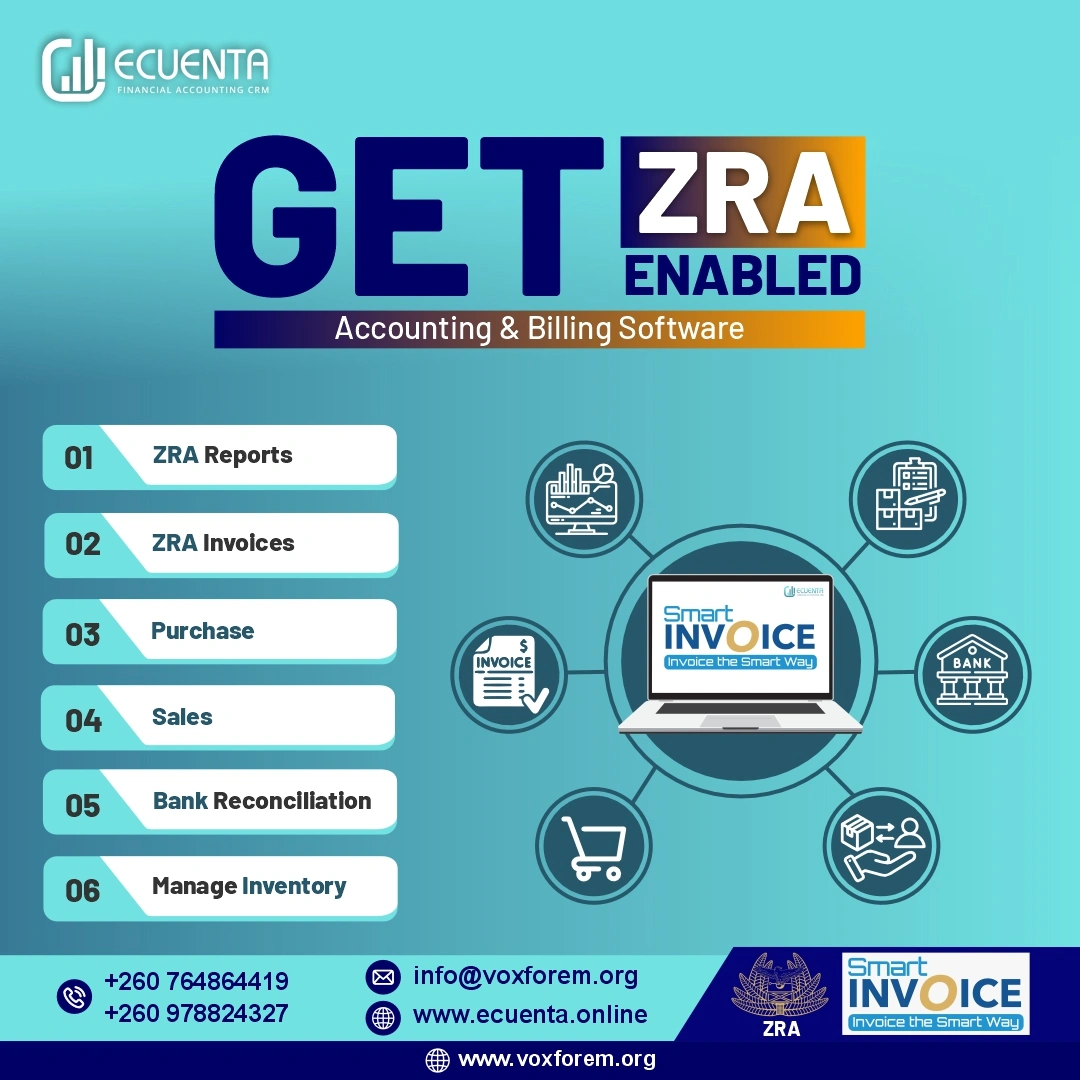
ZRA has increasingly focused on digital tax monitoring, including the Smart Invoice System. This system ensures that sales are recorded accurately and that VAT is properly reported.
For eCommerce businesses, compliance may involve:
Failure to comply with smart invoicing requirements can trigger audits and penalties.
ZRA requires most tax filings to be done through its online e-filling portal. eCommerce businesses must submit:
Late filing or non-submission can attract:
Maintaining an internal calendar for filing deadlines is strongly recommended.
Good record-keeping is essential for ZRA compliance. Online businesses should maintain records of:
ZRA may request these records during audits or compliance checks. Poor documentation is one of the most common reasons eCommerce businesses fail audits.
Many businesses require a ZRA Tax Compliance Certificate to:
To obtain this certificate, your eCommerce business must:
Maintaining ongoing compliance ensures that your certificate remains valid.
ZRA enforces penalties for:
Penalties can include fines, interest charges, account restrictions, and legal enforcement actions. For online businesses, this can quickly damage operations and reputation.
To stay compliant:
Compliance is not just about avoiding penalties—it builds credibility with customers, banks, and partners.
ZRA tax compliance is essential for the long-term success of any eCommerce business in Zambia. Proper registration, timely tax filing, and accurate record-keeping help online businesses avoid penalties while building trust and credibility.
With the right guidance and systems in place, compliance becomes manageable. Voxforem Technologies helps eCommerce businesses align their digital platforms with ZRA requirements, enabling them to operate legally, grow confidently, and scale sustainably in Zambia’s digital economy.